Governments Urge Households to Prepare for 72 Hours Without Water or Electricity
· eris
Imagine waking up tomorrow morning to discover that your electricity has stopped working, the taps have run dry and your mobile phone has almost no battery remaining, with no indication of when normal services might return.
Although such a situation might sound like something from a disaster movie, governments and emergency organisations are increasingly encouraging households to prepare for exactly this possibility, warning that unexpected disruptions could leave families without essential services for several days.
The recommendation is relatively straightforward: every household should ideally have enough basic supplies to remain independent for at least 72 hours, giving emergency responders time to restore services and assist people facing the greatest danger.
According to the British Red Cross, preparing for three days without electricity, running water or reliable communications does not mean that authorities are expecting an imminent catastrophe, but rather that households should be ready for disruptions caused by severe weather, flooding, infrastructure failures or other emergencies.
Recent research highlighted by the organisation suggests that only around 40 percent of people in the United Kingdom feel capable of taking action to protect themselves and their households during a major disaster, demonstrating how unprepared many families could be if essential services suddenly disappeared.
The advice is not limited to Britain, with governments across Europe and Asia encouraging residents to maintain emergency supplies as concerns grow over extreme weather, cyberattacks, international tensions and potential damage to critical infrastructure.
France recommends preparing for at least three days, while Germany advises households to maintain supplies for as long as ten days, reflecting differences in national emergency planning and the risks authorities believe residents should consider.
Japan, where earthquakes and other natural disasters have made emergency preparedness an established part of everyday life, considers 72 hours a minimum and encourages people to aim for approximately one week of supplies whenever possible.
The three-day recommendation has become particularly common because the first 72 hours following a major emergency can be exceptionally demanding for rescue workers, who must prioritise people in immediate danger while attempting to restore essential infrastructure.
During serious flooding, for example, emergency services may be occupied rescuing trapped residents, evacuating vulnerable communities and keeping hospitals operational, meaning that households in less immediate danger might need to manage independently until assistance becomes available.
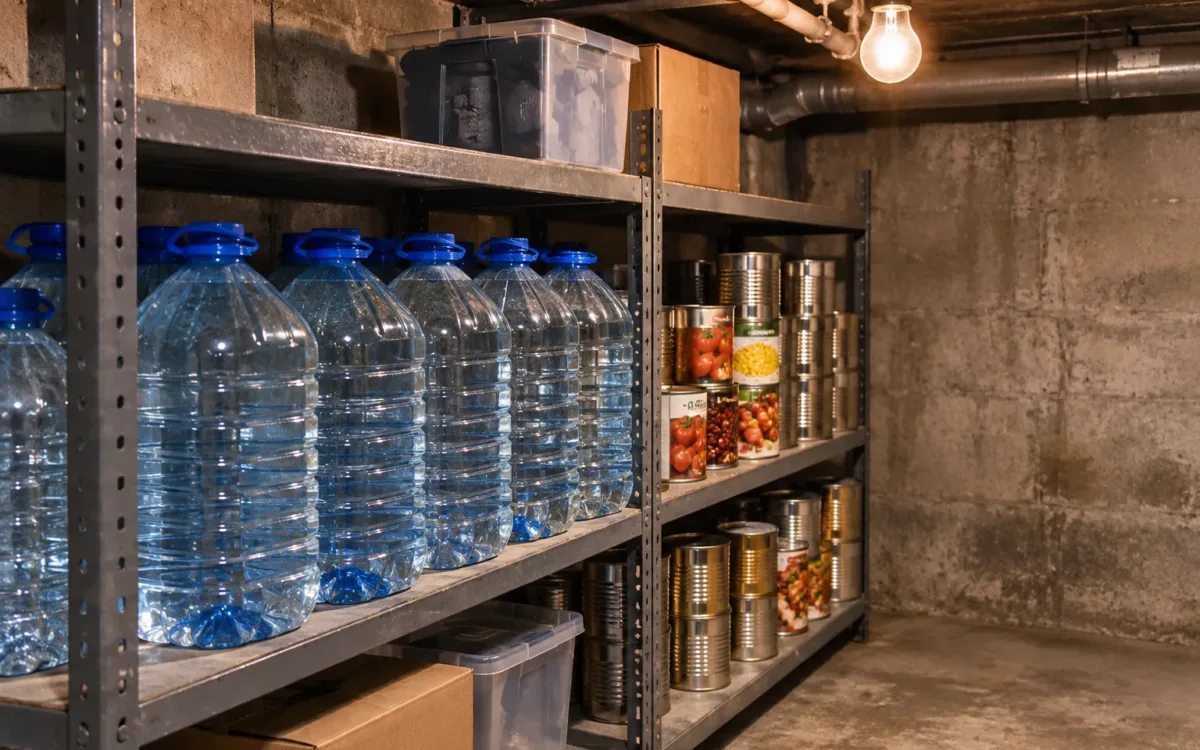
One of the most important supplies is drinking water, because an interruption to the water network can quickly make ordinary activities such as preparing meals, washing and maintaining hygiene considerably more difficult.
Households should therefore store enough safe drinking water for everyone living at the property, remembering that children, pets and people with particular medical requirements may have additional needs.
Food is another essential consideration, although emergency supplies do not need to involve expensive survival meals or specialist equipment, as ordinary long-lasting products such as canned vegetables, beans, crackers, peanut butter and other foods that can be eaten without cooking may be sufficient.
A manual can opener is worth keeping nearby, particularly because electric kitchen appliances may become useless during a prolonged power outage.
Families should also consider maintaining a supply of essential medication, basic first-aid equipment and hygiene products, including hand sanitiser, wet wipes and other items that remain useful when running water is unavailable.
A working flashlight, spare batteries and a fully charged portable power bank can make a significant difference during an electricity failure, allowing people to move safely around their homes and preserve some access to communication.
A battery-powered or hand-cranked radio can also provide important information if internet connections and mobile networks become unreliable, particularly when authorities are issuing weather warnings or evacuation instructions.
However, emergency preparation involves more than simply filling a cupboard with supplies, because communication can become difficult when mobile networks are overloaded or electricity failures affect telecommunications equipment.
Families are encouraged to discuss where they would meet if separated, keep important telephone numbers written down and make sure everyone knows where identification documents and other essential information are stored.
People who depend on electrically powered medical equipment should consider appropriate backup arrangements in advance, while households with babies, older relatives or pets may need additional supplies tailored to their circumstances.
Neighbours and relatives who live alone or require extra assistance should also be considered, since even a brief interruption to essential services can become especially challenging for vulnerable people.
Importantly, the British Red Cross stresses that emergency preparation should not be confused with panic buying, because the intention is to build resilience through small, practical steps rather than encouraging people to purchase excessive quantities of food and household products.
Starting with items already available at home and gradually replacing missing essentials can make the process affordable, while periodically checking expiration dates and battery levels helps ensure that supplies remain usable.
For many households, a single organised cupboard or emergency bag may be enough to make the difference between struggling through an unexpected disruption and managing the situation with greater confidence.
Nobody can predict exactly when the next major power failure, flood or infrastructure problem will occur, but having a realistic plan and three days of essential supplies could make an enormous difference if everyday life suddenly comes to a halt.