AI Reveals the Five Safest Countries to Survive a Global Disaster — And the Results May Surprise You
· eris
With concerns growing over international conflicts, extreme weather and the possibility of major global emergencies, many people are beginning to wonder where they would stand the best chance of surviving if everyday life suddenly came to a halt.
Now, an artificial intelligence-generated list has identified five countries that could offer important advantages during a worldwide catastrophe, highlighting locations with reliable resources, strong infrastructure and the ability to support their populations during prolonged disruptions.
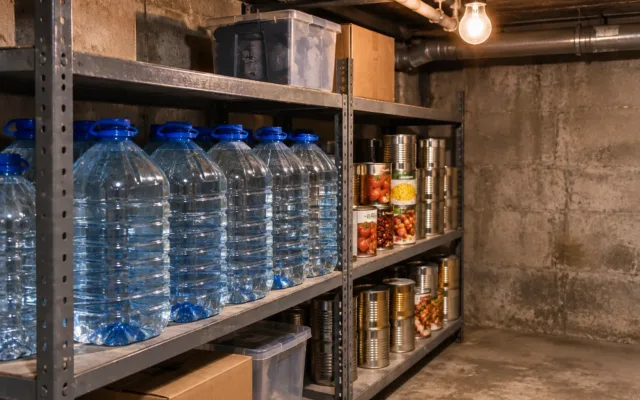
The list, reported by UNILAD, comes as governments increasingly encourage households to prepare for emergencies by storing enough food, drinking water and essential supplies to remain independent for at least 72 hours.
Although no country could guarantee complete protection from a nuclear conflict, devastating pandemic or global infrastructure collapse, certain geographical and economic characteristics may help communities cope better than others.
Among the five countries identified is New Zealand, whose remote location in the South Pacific could provide a significant advantage during an international crisis, particularly if major population centres in the Northern Hemisphere were affected.
Separated from much of the world by vast stretches of ocean, New Zealand also benefits from substantial agricultural production and freshwater resources, potentially allowing it to maintain essential food supplies even if international trade became severely disrupted.
However, its geographical isolation does not eliminate every danger, as the country remains vulnerable to earthquakes, volcanic activity and tsunamis.
Another country highlighted is Iceland, which combines a relatively isolated position in the North Atlantic with abundant freshwater and a remarkable capacity to generate electricity from renewable sources.
Almost all of Iceland’s electricity comes from hydropower and geothermal energy, reducing its dependence on imported fossil fuels for electricity generation and potentially helping the country maintain power supplies during certain international disruptions.
Its small population and established public services could also prove useful during emergencies, although volcanic activity, harsh weather and reliance on imported goods remain important vulnerabilities.
Switzerland is another country considered particularly well prepared, thanks largely to its extensive civil defence infrastructure, strong economy and longstanding tradition of military neutrality.
The country has hundreds of thousands of public and private protective shelters, with enough designated spaces to accommodate approximately its entire population, making its emergency preparedness arrangements unusually comprehensive.
Switzerland also benefits from Alpine freshwater supplies, a developed healthcare system and reliable public infrastructure, although its central European location means it would not necessarily escape the consequences of a major continental conflict.
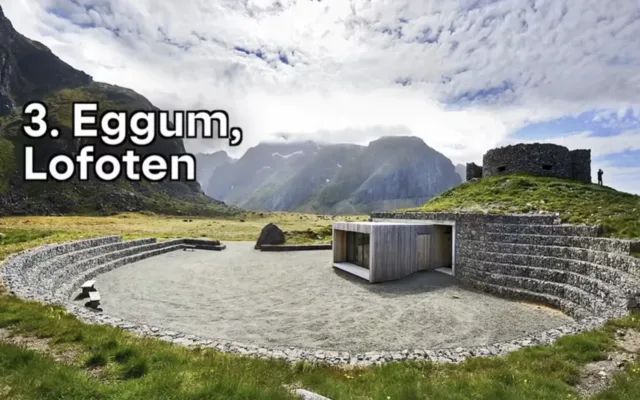
Norway also appears on the list, with its extensive freshwater resources, substantial renewable electricity production and relatively low population density offering potential advantages during a serious emergency.
The Scandinavian country generates most of its electricity through hydropower and has a significant seafood industry, providing valuable domestic resources that could become especially important if international supply chains were interrupted.
Its mountainous geography and dispersed communities may offer certain advantages, although Norway’s northern climate, dependence on imports for some goods and membership of NATO could present challenges in particular disaster scenarios.
Completing the five-country selection is Finland, a nation recognised for its comprehensive approach to emergency planning and its ability to maintain essential services during difficult circumstances.
Finland has invested heavily in civil defence, emergency shelters, reliable infrastructure and systems designed to keep society functioning during major disruptions.
Its agricultural capabilities, technological expertise and established preparedness policies could help the country respond to a range of emergencies, although its proximity to Russia creates different security considerations from those facing more geographically isolated nations.
Despite the attention surrounding the AI-generated selection, it is important to recognise that the list is not a scientifically validated ranking and does not establish which country would actually be safest in every possible catastrophe.
Different emergencies create different risks, meaning that a country well prepared for a pandemic might be considerably less protected against an earthquake, nuclear conflict or prolonged global food shortage.
Recent scientific research into catastrophic risks has also highlighted Australia, Argentina and Brazil as potentially resilient locations, demonstrating that conclusions can change depending on which threats and resources are examined.
Ultimately, experts emphasise that preparation matters regardless of where someone lives, because access to essential supplies, dependable information and effective emergency services can make an enormous difference during the first days of a crisis.
For ordinary households, that means developing a realistic emergency plan rather than assuming that moving to another country would automatically provide safety if a major global disaster occurred.